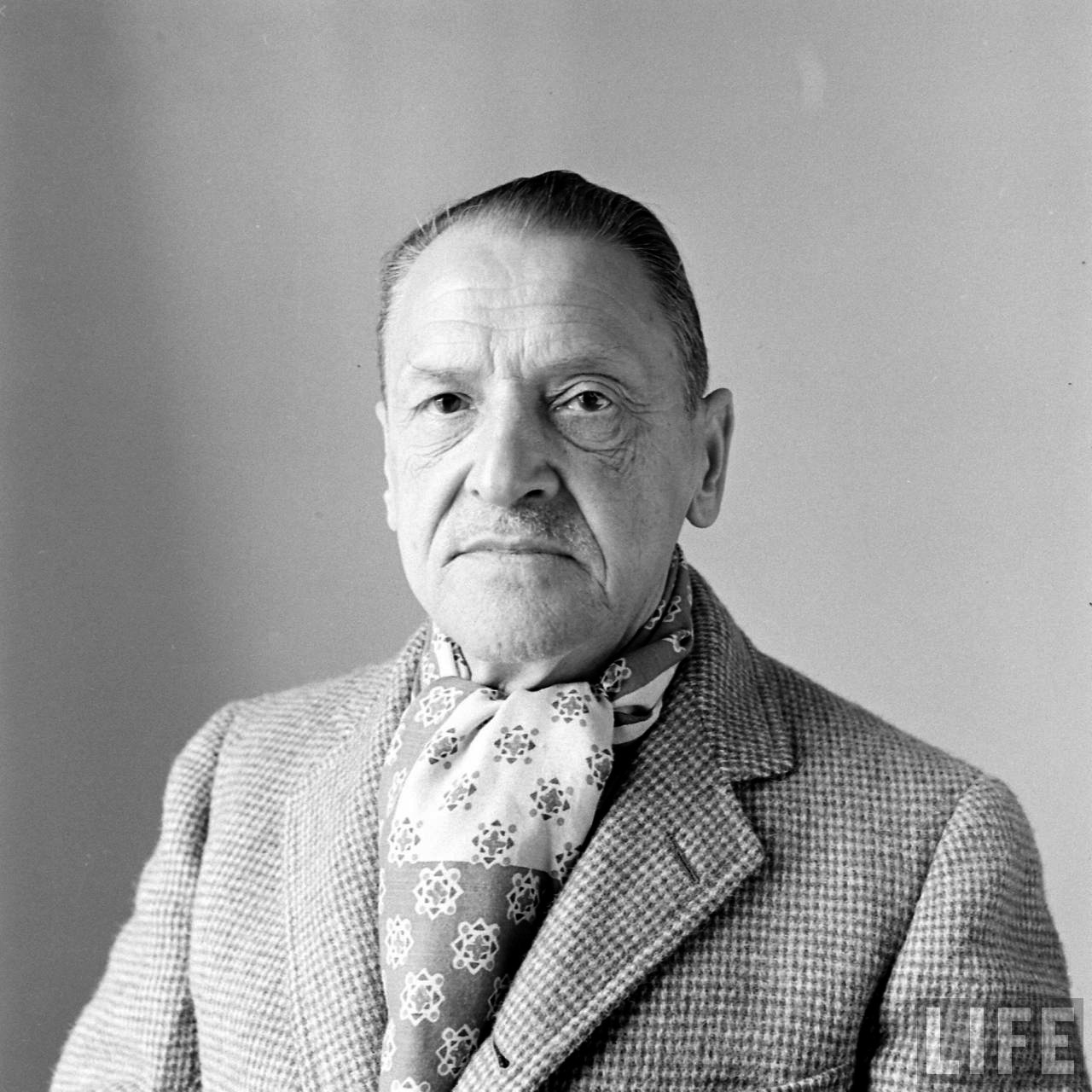
4.20.2009

Update


Because the only thing better than making a list is checking things off, here's an update:
Infinite Jest by David Foster Wallace (1,079p) 1.14.09
The Naked and the Dead by Norman Mailer (721p) 1.26.09
A People's History of the United States by Howard Zinn (729p) 2.3.09
Rabbit Angstrom by John Updike (1,516p) 2.16.09
Gravity's Rainbow by Thomas Pynchon (776p) 3.7.09
Of Human Bondage by W. Somerset Maugham (704p) 3.14.09
The Executioner's Song by Norman Mailer (1056p) 3.22.09
Ulysses by James Joyce (768p) 3.29.09
The Life and Opinions of Tristram Shandy, Gentleman by Laurence Sterne (720p) 4.5.09
The Sot-Weed Factor by John Barth (819p) 4.18.09
Anna Karenina by Leo Tolstoy (853p)
The Early Stories: 1953-1975 by John Updike (864p)
The Complete Novels (At Swim-Two-Birds, The Third Policeman, The Poor Mouth, The Hard Life, and The Dalkey Archive) by Flann O'Brien (787p)
The Recognitions by William Gaddis (956p)
The Magic Mountain by Thomas Mann (706p)
The Beatles: The Biography by Bob Spitz (992p)
Mason and Dixon by Thomas Pynchon (773p)
The USA Trilogy (The 49th Parallel, 1919, and The Big Money) by John Dos Passos (1,144p in 3 volumes)
Women and Men by Joseph McElroy (1192p)

4.19.2009

Barth Bag

I tried to prepare for John Barth's The Sot-Weed Factor by reading the poem it seeks to explain. Thanks to Google books and the Harvard College library, I was able to check out an interweb version for the low, low cost of free. It's a good thing too, because after about 15 pages of lower case f's instead of s's, I gave up.

I didn't give up on the actual book though. I enjoyed it. I think Barth pulled off the "big, long joke" better than Sterne did in Tristram Shandy (granted he had a couple hundred more years of literary technique to draw from). I guess Barth was bigger in the 60's and 70's because his internet presence is seriously lacking when compared to his post modern buddies like Pynchon, who, as noted in my Gravity's Rainbow posts, has his own wiki site to explain all his crazy crap. Barth's crazy crap is a little more focused but still involves a ton of characters (who are often disguised as other characters) and some kind of cast list would have been helpful.

The book also taught me some (probably inaccurate) things about Maryland history, namely that it was full of Catholic-hating whores in the 1600's, so I'm glad I finished it before the upcoming Maryland Day. Barth was born in Cambridge and taught at Hopkins, so to paraphrase Brendan, "his Maryland roots are true." I first read him (Barth, not Brendan) in a "Maryland in Literature and Film" class as a freshman in college. I remember hating the assigned stories in Lost in the Funhouse, but that probably had little to do with the writing and something more to do with: (1) being a freshman in college, (2) more eagerly awaiting the part of the class that dealt with Homicide: Life on the Street, (3) probably not actually reading the stories, and (4) the fact that the class was taught by a bowling pin shaped professor from the Spanish Dept. Barth himself has been know to hang at my alma mater as seen in the photo below featuring his turkey neck and Billy Crystal's favorite author.Note: Pete will be the only one who understands most of this. Sorry to the other 5 readers.

4.18.2009

...and another thing


In Tristram Shandy, the author/narrator keeps referring to the reader as "Ma'am." I didn't take kindly to that presumption. Not one cotton pickin' bit. Damn, I'm grizzled.

4.12.2009

Exceptionally Long Jokes


I finished Tristram Shandy a couple weeks ago. I laughed at parts, I get that nothing is supposed to happen, but overall it seemed like a joke that was stretched a little long and had probably already been stretched to its limits en espanol. Like Ulysses, I appreciate that someone was messing with narrative form so long ago but in this case the tone didn't change enough to keep me interested for 700+ pages. It's also likely that I'm suffering from long book fatigue and that Tristram Shandy was the first casualty.

This may also be a rare case in which I liked the movie more than the book. I thought Michael Winterbottom's 2006 flick was able to point out the humor in the book and add a little of its own related to the book's unfilmability (word?). It had all that and Steve Coogan too.

I'm reading the Sot-Weed Factor now and supplemented it with the shorter, unrelated, non-project book Winesburg, Ohio. I loved it and not only because of its length. Sherwood Anderson managed to articulate, in simple and evocative language, a variety of human feelings. Good stuff.

Addition: I've added Thomas Mann's The Magic Mountain to the project and have instituted a "one-in, one-out" policy on book buying. Friends, neighbors, family and the local libraries will all benefit from my book overflow.

4.03.2009

Joyce Division


Q: How Irish is Ulysses?
A: The main character has a lucky potato.

That's some serious Irish (apologies for multiple "I-words"). I'm glad I followed the recommended Joyce reading order of Dubliners and Portrait of the Artist... before Ulysses. Dubliners gives a idea of the scope and feel of Joyce's Dublin and it's useful to have read Portrait so you know what an unsatisfied wiener Stephen Daedalus is when he pops up in Ulysses.

Some of the non-Shakespeare literary references in the beginning sailed over my head, but once the book got into the experimental sections I really enjoyed it. Specifically the drunken hallucination play script of "Circe" and the FAQ-style "Ithaca." It's amazing to think of someone fucking with the novel format almost a hundred years ago when someone who attempted it just recently is being hailed as a visionary. Joyce shows it's possible to convey feeling and narrative information in vastly different ways. Whatta guy!

I haven't been reading much this week: I'm a few hundred pages into Tristram Shandy and I read a few more Updike stories.

3.27.2009

Ex Games


I finished The Executioner's Song last weekend (which means I've spent the intervening week looking for my third awesome Norman Mailer picture).

I enjoyed the book a lot. I could have done without the extended battles over TV rights to Gary Gilmore's story, but I guess extraneous detail is kind of Mailer's thing. The book also had a better chance than Armies of the Night or Naked and the Dead since it dealt with a lot of issues I'm interested in, namely: the death penalty and society using unique, personal situations as larger political causes. It ultimately convinced me to pick up a cheap copy of Mailer's book on the Rumble in the Jungle, The Fight, from Better World Books. Maybe I should have just watched When We Were Kings again instead.

Not unlike Truman Capote's In Cold Blood, Mailer did a great job of turning actual people into great literary characters, making this the second book in a row that I enjoyed because of a similarity to Capote.

I haven't found much Capote in Ulysses which I'm about halfway through. So far the book feels like James Joyce keeps poking at my brain with his cane and if he doesn't stop I'll slap the eyepatch right off his dead Irish face. I've started the big book of Updike's early short stories to help keep my sanity.

3.15.2009

Clubfootin'


This week, I began and finished W. Somerset Maugham's (pictured above as a Vincent Price-ish ghoul) autobiographical Of Human Bondage. It was a relatively easy read after being bogged down in Gravity's Rainbow for a month. Maugham was Capote's favorite writer and the similarities in writing style are clear. There are some great, descriptive sentences in Of Human Bondage; almost all of which relate directly to the plot (ahem, Pynchon...).

Philip Carey's wiener-ness reminded me a lot of Augie March and I thought their relationships with women and frequent occupation shifts were also similar; although March's trip to Mexico (never turns out well for anyone) is replaced with Carey's stay in Paris. Carey is in Paris at the right time for Maugham to engage in some kick-ass impressionist name droppin' (Monet, Manet, Lisa Bonet, etc.) and also briefly allude to Gauguin who would later appear as "Charles Strickland" in Maugham's The Moon and Sixpence.

In other Big Book news I'm following The Morning News' Tournament of Books mainly for some good reading ideas and also because John Hodgman and Junot Diaz are judges. Two big books are in the running for the coveted Rooster: Roberto Bolano's 2666 and Peter Matthiessen's Shadow Country. Both are award winning epics, available at my local library but I'm not sure I'm interested enough in either to add 900 more pages to the project.

Next Up: Last Chance for Mailer - The Executioner's Song
Widget_logo
Site Meter