8.09.2009

Mason & Dixon & Update

Most recently read and most impossible to summarize, Pynchon's Mason & Dixon. Structurally it's similar to Barth's Sot-Weed Factor in that it's a post-modern novel written in an 18th century style. Pynchon went all out with random capitalization and olde-tyme spellings. Overall, it's a good book about friendship through shared circumstances, but it shines in its craziness. The book includes a talking dog and a mechanical duck that carries grudges. It also includes these two ridiculous anachronisms:

- An Englishman, just returned from a trip to Italy is eager to introduce his pubmates to a fantastic new dish he discovered there (pizza). Unable to find dough, tomato and cheese, they made do with stilton cheese, anchovies, and "ketjup," on a loaf of brown bread. Que delicioso!

- Friggin' Popeye: "That is, 'I am that which I am,' " helpfully translates a somehow nautical-looking Indiv. with gigantick Fore-Arms, and one Eye ever a-Squint from the Smoke of his Pipe.

Pynchon continues his infatuation with silly names for the non-historically accurate characters, particularly the narrator Reverend Wicks Cherrycoke. Also, I bet you didn't know George Washington had a black, Jewish slave chef. I liked the book and there's a lot more where that came from but my brain has been taxed enough already. I'm gonna go read some Calvin & Hobbes.

I'm almost done so here's an update to make this post look longer:
Infinite Jest by David Foster Wallace (1,079p) 1.14.09
The Naked and the Dead by Norman Mailer (721p) 1.26.09
A People's History of the United States by Howard Zinn (729p) 2.3.09
Rabbit Angstrom by John Updike (1,516p) 2.16.09
Gravity's Rainbow by Thomas Pynchon (776p) 3.7.09
Of Human Bondage by W. Somerset Maugham (704p) 3.14.09
The Executioner's Song by Norman Mailer (1056p) 3.22.09
Ulysses by James Joyce (768p) 3.29.09
The Life and Opinions of Tristram Shandy, Gentleman by Laurence Sterne (720p) 4.5.09
The Sot-Weed Factor by John Barth (819p) 4.18.09
The Beatles: The Biography by Bob Spitz (992p) 5.2.09
The Early Stories: 1953-1975 by John Updike (864p) 5.3.09
The Complete Novels (At Swim-Two-Birds, The Third Policeman, The Poor Mouth, The Hard Life, and The Dalkey Archive) by Flann O'Brien (787p) 5.19.09
Anna Karenina by Leo Tolstoy (853p) 6.3.09
The Recognitions by William Gaddis (956p) 6.24.09
The Magic Mountain by Thomas Mann (706p) 7.8.09
Mason and Dixon by Thomas Pynchon (773p) 7.23.09
The USA Trilogy (The 42nd Parallel 8.5.09, 1919, and The Big Money) by John Dos Passos (1,144p in 3 volumes)
Women and Men by Joseph McElroy (1192p)

8.08.2009

"You've Always Been the Caretaker"


Next up was Thomas Mann's The Magic Mountain. It was an interesting spin on the standard bildungsroman where instead of traveling to have the world of culture, art, and philosophy revealed to him, Hans Castorp stays in one place and has all of WWI Europe visit. He's the same kind of naive weiner as Philip Carey and Augie March, but Thomas Mann seems to be having more fun with him. From the moment of his arrival at the sanatorium to visit his cousin, Mann puts Castorp in a Catch-22-like paradox where he must prove his wellness to leave, then eventually demands to stay once he's well enough to go. As the situation goes on and on it becomes less funny and takes on more of a creepy, Shining-like inevitable trap where the passage of time gets blurrier and blurrier. Thankfully Castrop alternates between the old fashioned young dope extremes of unjustified indignation and cockeyed optimism, keeping most of the 700 pages fairly fun.

There are a ton of symbolic characters in the book (more than half of which sailed over my post-war head). My favorites were the ever arguing and politically opposed duo of Settembrini and Naphta who I took to be early 20th Century representations of Bill O'Reilly and Al Franken:

Two loudmouths who really can't live without each other. A love story as old as time itself...

8.07.2009

The Missing Link


I'm playing a little bit of catch-up here and writing about a few books from the project that I finished almost two months ago. First up, William Gaddis' The Recognitions.

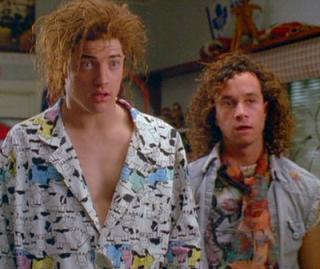
It's an Encino Man-like link between the mid twentieth century American traditionalists (I guess Saul Bellow is the best example) and the experimental 60's/70's post-modernists (Barth, Pynchon, etc.) that were soon to come. I guess a more apt (the book is at least partially about art), Brendan Fraser-less comparison would be Picasso who mastered traditional painting techniques then created something completely original.

I guess the problem is that being such a literary bridge might be too much of a burden for one novel to bear. I enjoyed the beginning of the book and the portions that dealt with art forgery. I thought there was an interesting theme developing with the main character's day/night work schedule being important to him because of lighting since all light provided in an actual painting (forged or otherwise) is artificial. As the book went on it followed some standard big book conventions: hundreds of characters, globe trotting, funny names and aliases. It just got to be too much, especially when there were such promising bits at the beginning. There were some Altman-like "eaves dropping on seven conversations at once" chapters that don't quite work as well in print as they do in Nashville or Short Cuts.

I ended up thinking that the book suffered from one of two (Kurt Cobain-related) effects:

- The Vaselines Effect - the album/book's reputation is enhanced beyond what it may deserve because it was overlooked when it came out. Fervent followers with means to do so spread its gospel (Cobain with the Vaselines, Jonathan Franzen, David Foster Wallace and others with The Recognitions), fans of the followers freak out and assume they have to love all of their favorite author/musicians' influences (both why I own the Vaselines album and the Recognitions).

- The Nirvana Effect - the followers (the Seven Mary Threes of the world) are so omnipresent that they water down the novelty of the original. Without experiencing the novel's successors chronologically, it's hard to tell how groundbreaking it was. (Also known as The Pixies Effect)

6.24.2009

The Short Story

If reading all of these long books has had any effect on me, it's given me a better appreciation for short stories. I've enjoyed a few smaller collections this year including Wells Tower's debut Everything Ravaged, Everything Burned which fits somewhere between Elmore Leonard and Raymond Carver on the dude-tastic short story scale (a highly scientific scale graded in terms of alcohol content, Tower is about 70 proof). In the context of this project it's amazing what Tower can squeeze into 15-20 pages.

I've also dipped my toe (which is attached to a stolen fake leg) into the Southern, Catholic waters of Flannery O'Connor's short stories. I'm reading them sparingly so as not to get an Updike-ian overload. So far they all have unique, striking images that makes them easy to distinguish. When talking about them with friends it was a challenge to match up the element (false leg, serial killer, etc) with the excellent titles. I look forward to reading the rest but according to this entry, O'Connor believed her greatest accomplishment was teaching a chicken to walk backwards. Sadly no youtube footage exists. Thanks again to the decidedly un-Southern, un-Catholic girl who recommended O'Connor to me!

On the other side of the short story coin I recently tried Thomas Pynchon's short story collection, Slow Learner. After reading two Pynchon books this year and being interested in his new detective novel, I was curious to see what he had done in his early stories. I should have kept driving without stopping. Pynchon warns you of as much in the introduction where he basically explains that the stories are hack-y crap. Thank god for the DC Public Library and their help in weaning me of book purchasing. It's also kind of a strange meta-joke for a reclusive author to release an admittedly bad story collection which his nerdtastic fans will snap up solely because it has a 20 page personal intro wherein said recluse tries to covince you not to read (or at least not to judge him on) the stories that follow. Well played Lit Nerd King, well played.

If only I were a Mad Men character I could be writing my own short stories to submit to such fine publications as this:

6.10.2009

Free Lunch


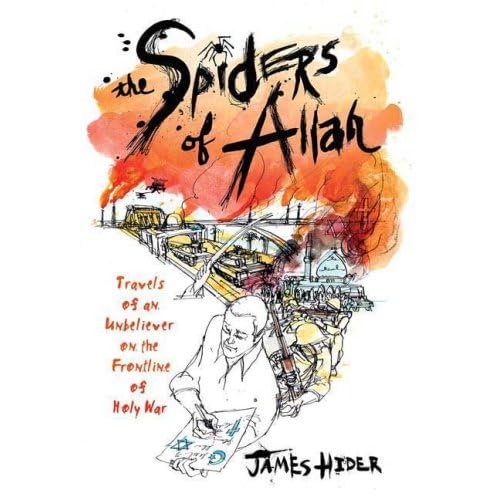
I won a book on goodreads in a kind of preview review type deal. The book was The Spiders of Allah by James Hider. It's not a "big book" but I did get it through bookly means in an envelope from St. Martin's Press. Here's a review I posted on the site in hopes I'll be eligible to win more books I won't really like:

I entered the giveaway for the book mainly because of I thought the cover art was by Ralph Steadman. I was completely wrong.

When I re-read the synopsis of the book after winning I thought I'd be getting a non-fiction book that would add some religious and historical context to middle eastern conflicts. I was mostly wrong.

I enjoyed the two chapters that discussed the Israeli/Palestinian conflict and some of the religious history behind it. Then the book takes a nearly 200 pg diversion into Iraq, largely ignoring religion (aside from occasional Sunni/Shiite tidbits), in favor of the standard Iraq war stuff of Saddam brutality, military embeds, translator fixers, and the general extreme-journo bravado that pops up a lot with Iraq War correspondents (I'm looking at you Lara Logan). I wasn't really interested for the same reasons I stopped watching Generation Kill after two episodes. I have information overload connected to the Iraq War. Sorry dude. Too late.

The book was ok, and it was free, but ultimately couldn't escape the "gonzo" cloud that it was branded with. Too often "new gonzo" authors (ahem, Matt Taibbi) come off as imitators rather than followers. I should probably learn to avoid books labeled this way and more generally continue to avoid war non-fiction.

6.04.2009

Can't Beat 'Em

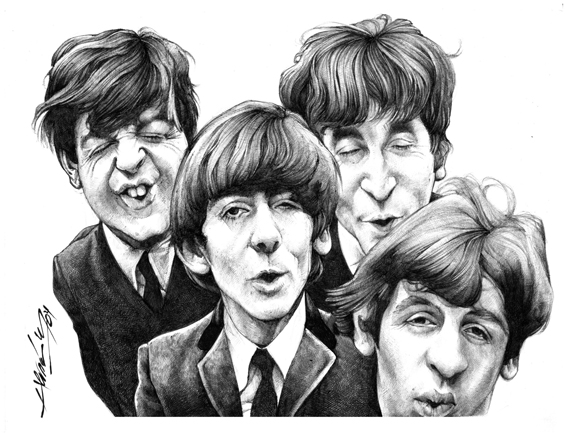
I just finished Bob Spitz's biography of the Beatles. It was indeed a big book but I'm not sure it needed to be. They're probably the most omnipresent band of all time and were exhaustively covered in a media blitz 14 years ago. What's changed with the Beatles since then? George died. That's it. Their shit still ain't on iTunes.

Furthermore, George's death wouldn't have been included in Spitz's book which ends with the band breaking up. I'm usually ok with sad or generally unhappy endings but all the passive aggressive ego and legal/business posturing that went on in the last few years of the band is a major turnoff and Spitz doesn't do a good enough job putting it in perspective with the years of great work they did. He also doesn't really point out that they were pretty damn immature and had basically experienced an amount of publicity that could take a serious toll on anyone's personality. Some primary interviews might have helped, but instead it's studio hands or heads of early fan clubs. The only quotes from the actual Beatles are either VERY well known or from the actual Anthology documentary (which, by the way, had the benefit of being able to play the song while talking about how it was recorded).

So I guess I'm saying that, aside from some Yoko-bashing (always appreciated), this book was about as necessary as the movie Troy.

6.02.2009

Te Gusta Flann?

As I may have noted before, I make a lot of trips to the Daedalus Books Warehouse in the anonymous business park wastelands of Columbia, MD. You can't really go there looking for anything specific as their stock is largely dependent on which publishers' eyes were bigger than their stomachs. There's always at least three things I want there, I just have to spend time browsing, but for $3-4 a pop, it's worth it. That much browsing can give you a false sense of an author's popularity. "Have I actually heard of this guy or have I just been seeing his unwanted overstock here for the past three years?"

I'd been seeing Flann O'Brien's novels there for a few years before I picked up the big book project's own Complete Novels last year. After seeing unwanted copies of The Third Policeman and The Poor Mouth I made a point of looking Flann up on Wikipedia. I was intrigued enough by the multiple super-Irishy pen names to pick up the Complete Novels on my next visit. I also noticed that there was an entire publisher named after his novel, The Dalkey Archive.

These novels were fitting follow-ups to Ulysses in my year of potato-eatin' readin'. Obama fave Joseph O'Neill awarded O'Brien the bronze medal in Irish Lit (Gold, Silver) in an excellent Atlantic Monthly reexamination. Apparently the dude had a tough time of it during his life and never even got The Third Policeman, his second (an my favorite of his) novels published.

So over a couple weeks of federal negotiated rule-making I was able to go through the works of one of his pseudonyms. The novels broke down like so:

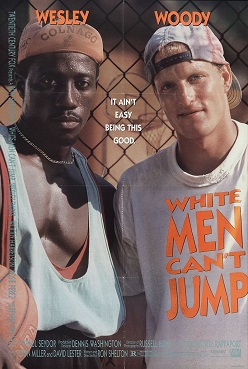
At Swim-Two-Birds - Reeeeeeeeally experimental. Funny in parts, but I don't think I got it. Involves several layers of books within books. Too much of a "looking into opposite mirrors" experience at times. It also includes a quote that has been proven wrong by a certain movie and Ireland's Olympic medal counts: "With all his faults and by God he has plenty, the Irishman can jump. By God he can jump. That's one thing the Irish race is honoured for no matter where it goes or where you find it - jumping. The world looks up to us there." I liked it, but not as much as...

The Third Policeman - Very funny and much more focused. Involves a gag in which an Irish-equivalent, Hot Fuzz, country policeman purports his theory that people ride bicycles so much that they exchange molecules and at a certain point people can become more than 50% bicycle and be dangerous to society.

The Poor Mouth - Originally written in Irish and published under O'Brien/O'Nolan's other pseudonym Myles na gCopaleen. A good, short parody of Irish sentimentality. Poor Frank McCourt wouldn't have a career if more people thought this book was funny.

The Hard Life - A coming-of-age/bildungsroman story that takes clearer, better shots at Catholicism than A Portrait of the Artist.... I might have enjoyed this more because I read it after attending an awful Catholic wedding service.

The Dalkey Archive - Supposedly Flann's worst. I liked it mostly because it rehashes the crazy bicycle story from the (as then unpublished) The Third Policeman and because James Joyce appears as a character who never actually died and forgets that he wrote Ulysses.

It's kind of a given that a guy who came up with two good pseudonyms would have some great (and Irish-tastic) character names. Here are but a few:
- Pooka MacPhellimey
- Sgt. Pluck
- Policeman MacCruekeen
- Father Fahrt (har har har)
- Finnbarr and his brother, Manus
- McGettigan
- Sgt. Fottrell

God this picture kicks ass:
Widget_logo
Site Meter